

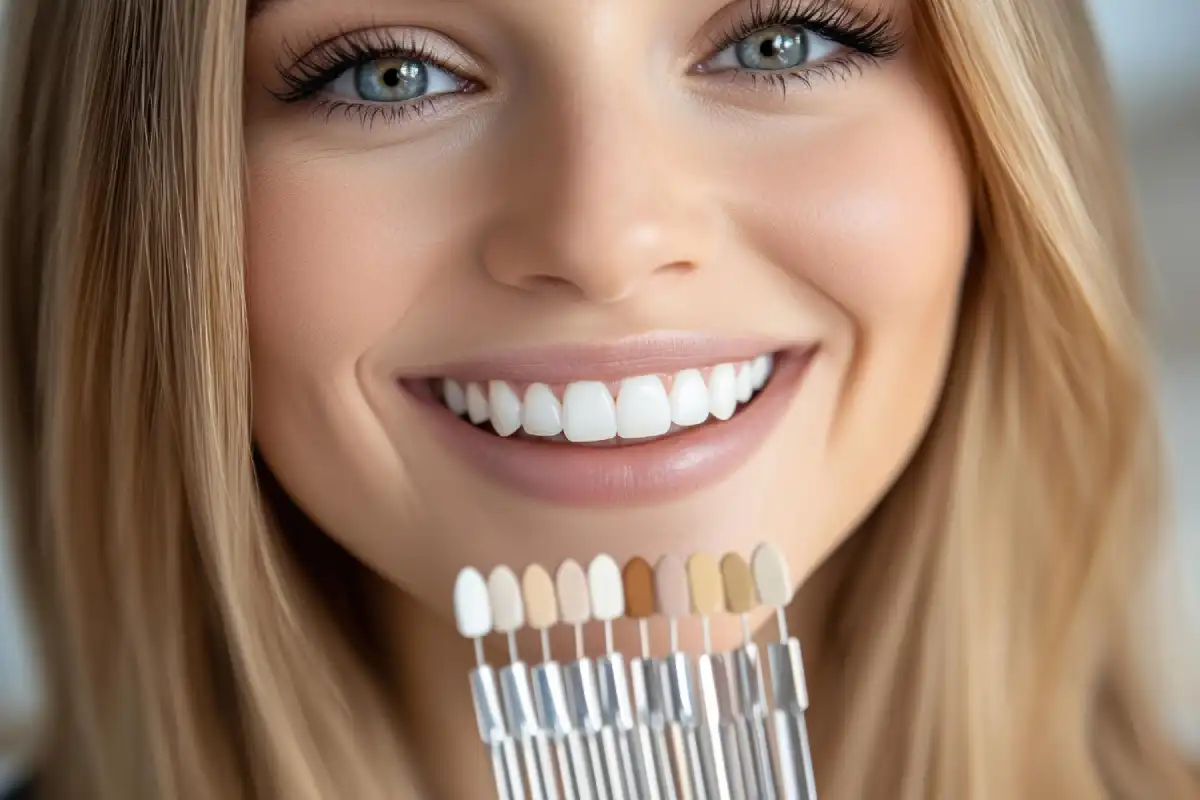
How Is Tooth Shade Assessed Before Whitening?
Patients considering teeth whitening Bodrum should begin with an assessment of their natural tooth colour rather than choosing a final shade in advance. Teeth are not naturally one uniform white colour, and their appearance is influenced by enamel thickness, underlying dentine, translucency and surface staining. A professional shade assessment helps establish the starting point before treatment and provides a reference for evaluating changes afterwards.
The dentist may compare the existing tooth colour with a shade guide or use other clinical methods to document the baseline. Different teeth within the same mouth can naturally have slightly different shades. Canines, for example, may appear darker than the front incisors because of variations in dentine thickness and tooth structure. This means whitening should aim for a balanced overall appearance rather than making every tooth look exactly identical.
The type of discolouration is also important. Surface staining caused by coffee, tea, tobacco or strongly pigmented foods may look different from deeper colour changes within the tooth. A single dark tooth may require separate investigation because trauma, previous root canal treatment or internal changes can affect colour differently from general staining.
Patients researching teeth whitening Bodrum should therefore understand that shade planning is based on the existing teeth and their clinical condition rather than on selecting the lightest possible shade from a chart.
Why Are Fillings, Crowns and Veneers Checked Before Whitening?
Existing dental restorations are an important part of whitening planning because fillings, crowns, bridges and veneers do not usually change colour in the same way as natural teeth. A restoration-aware whitening plan helps the dentist predict whether visible dental work may appear different after the surrounding natural teeth become lighter.
For example, a tooth-coloured filling that blends well with the current tooth shade may appear darker after whitening. Similarly, a front crown may remain the same colour while neighbouring natural teeth become lighter. This does not automatically mean that the filling or crown needs replacement, but the patient should understand that a colour difference may become more noticeable.
The condition of existing restorations should also be assessed before treatment. A filling with damaged margins, a loose crown or another restoration requiring attention may need to be managed before cosmetic whitening is planned. The dentist should distinguish between a restoration that is clinically sound but may differ in colour and one that actually requires treatment.
A dental clinic Bodrum patients choose for whitening should therefore assess both natural teeth and visible restorations before confirming the treatment sequence. In some cases, whitening may be completed first and restorative shade decisions made only after the final tooth colour has stabilised.
How Do Sensitivity and Gum Health Affect Treatment Planning?
Tooth sensitivity should be discussed before whitening begins. Some patients already experience sensitivity to cold drinks, air, brushing or sweet foods. Exposed root surfaces, gum recession, worn enamel, cracks or other dental conditions can contribute to this sensitivity. A pre-whitening sensitivity assessment helps determine whether treatment can proceed as planned or whether the approach needs to be modified.
Temporary sensitivity may occur during or after whitening in some patients. The intensity and duration can vary. Patients with a history of sensitivity may require a more cautious treatment protocol, adjusted application times or supportive oral care recommendations. The aim is to improve tooth shade while maintaining patient comfort and avoiding unnecessary irritation.
Gum health is equally important. Bleeding, swelling, redness or significant inflammation may indicate that periodontal care is needed before cosmetic treatment. Whitening products should be used within a controlled clinical environment so that surrounding soft tissues can be protected appropriately.
Patients should also report any untreated dental pain before whitening. Cosmetic treatment should not be used to mask symptoms that may require diagnosis. A Bodrum dentist can evaluate whether sensitivity is related to normal tooth characteristics, gum recession or another dental issue that needs attention before whitening.
How Is a Realistic Whitening Result Planned?
Whitening expectations should be discussed before treatment because natural teeth respond differently depending on their original shade and the type of discolouration. A realistic shade planning process focuses on the degree of improvement that may be achievable for the individual patient rather than promising a fixed final colour.
Yellowish staining may respond differently from grey or internally altered shades. The age of the patient, enamel characteristics and history of previous dental treatment can also influence the result. Two patients starting with similar-looking teeth may therefore experience different degrees of colour change.
Patients should also understand that a very bright or opaque appearance is not necessarily the most natural result. Tooth translucency, neighbouring teeth and facial features all influence how colour is perceived. The goal is usually to create a fresher and more balanced appearance while respecting the natural structure of the teeth.
Photographs or shade records may be used before and after treatment to document the change. However, visual perception can vary according to lighting conditions, so comparisons should be made carefully. The dentist should explain that whitening improves natural tooth colour but does not completely redesign tooth shape, position or surface texture.
What Should Patients Know About Whitening Aftercare?
Whitening aftercare is important for maintaining the result and managing any temporary sensitivity. Patients may receive individual instructions about oral hygiene, diet and products to use during the early period after treatment. A post-whitening care plan should reflect the patient’s sensitivity level and daily habits.
Strongly pigmented foods and drinks such as coffee, tea, red wine and certain sauces can contribute to staining over time. Tobacco use can also affect tooth colour. Patients do not necessarily need to avoid all coloured foods permanently, but understanding which habits may influence staining can help with long-term maintenance.
Regular brushing and cleaning between the teeth remain important. Plaque and surface deposits can make the teeth appear duller and may reduce the visual effect of whitening over time. Professional cleaning can also be considered when clinically appropriate.
If temporary sensitivity occurs, patients should follow the recommendations provided by the dental team. Persistent or severe pain should not simply be accepted as a normal whitening effect and should be reassessed professionally. Aftercare is therefore not only about preserving colour but also about monitoring how the teeth and gums respond to treatment.
How Is Long-Term Whitening Maintenance Planned?
Whitening results are not permanent because natural teeth can gradually change colour again due to ageing, diet, smoking and daily habits. A long-term whitening maintenance plan should therefore be based on the individual patient rather than repeating treatment at fixed intervals without assessment.
Some patients may maintain their preferred shade for a long period, while others may notice staining sooner because of frequent consumption of strongly coloured drinks or tobacco use. The dentist can reassess the teeth and determine whether maintenance whitening is appropriate.
Existing restorations should also be reviewed if natural teeth are whitened again later. Crowns, fillings and veneers will generally remain their original shade, so repeated whitening can create a larger colour difference if restorations are visible within the smile.
Patients should avoid using whitening products continuously without professional guidance. More frequent or stronger application does not necessarily produce a better result and may increase sensitivity. Long-term care should balance cosmetic goals with the health of the natural teeth and gums.
Conclusion
Teeth whitening Bodrum treatment is most effective when shade planning, tooth condition, existing restorations, sensitivity and gum health are evaluated before treatment begins. A personalised whitening approach helps establish realistic expectations and allows the treatment method to be adapted to the patient’s individual needs.
Aftercare is equally important. Daily oral hygiene, awareness of staining habits and professional follow-up can help maintain the result over time. Whitening should therefore be viewed as part of a wider dental care plan rather than as a one-time cosmetic procedure with a guaranteed permanent shade.
Frequently Asked Questions
How is tooth shade measured before whitening?
The dentist may use a shade guide or clinical records to document the starting colour and compare changes after treatment.
Can every patient achieve the same shade?
No. Whitening response depends on natural tooth colour, enamel characteristics and the type of discolouration.
Do crowns and fillings whiten?
No. Existing restorations generally do not change shade in the same way as natural teeth.
Can whitening cause sensitivity?
Temporary sensitivity can occur in some patients, particularly if they already have sensitive teeth.
Should gum problems be treated before whitening?
Yes. Gum inflammation or other oral health concerns should be evaluated before cosmetic treatment begins.
Does whitening remove all types of discolouration?
No. Different types of staining respond differently, and some colour changes may require another approach.
Can coffee stain teeth again after whitening?
Frequent consumption of strongly pigmented drinks can contribute to gradual staining over time.
Are whitening results permanent?
No. Tooth colour can gradually change again because of ageing, diet, smoking and other habits.
Can whitening be repeated later?
Maintenance whitening may be considered after professional reassessment of the teeth and gums.
What is the most important part of whitening aftercare?
Good oral hygiene, appropriate professional follow-up and management of habits that contribute to staining are all important.