

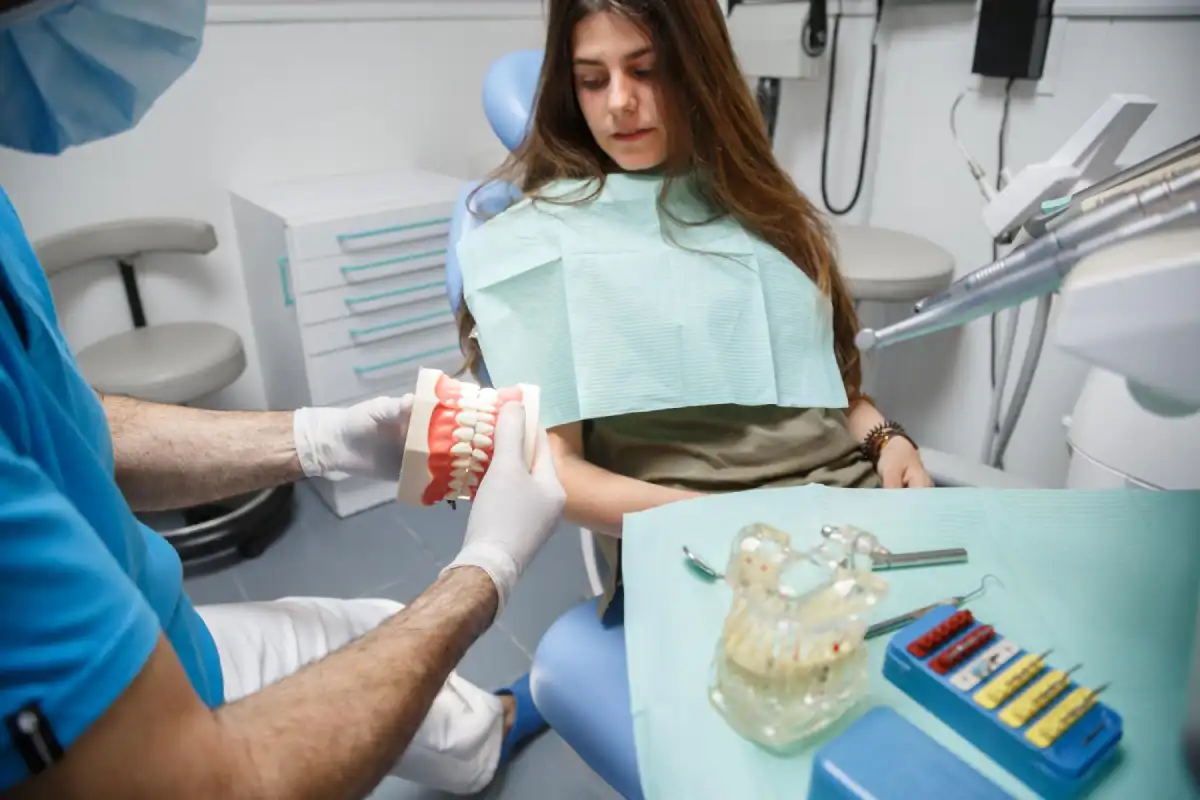
Why Do Crowns and Fillings Need Regular Monitoring?
A visit to a Bodrum dentist is not only necessary when a crown or filling becomes painful, loose or visibly damaged. Dental restorations are exposed to chewing forces, changes in the surrounding teeth, plaque accumulation and normal wear over time. A restoration monitoring plan allows the dentist to assess whether existing dental work remains stable and whether the natural tooth supporting the restoration is still healthy.
Fillings and crowns are designed to restore damaged teeth, but they do not make the treated tooth completely maintenance-free. The edges of a filling or crown meet natural tooth structure, and these areas need to remain clean and clinically stable. Changes can sometimes develop gradually without causing immediate discomfort. For this reason, routine dental reviews may help identify issues before the patient notices a significant symptom.
The age of a restoration alone does not necessarily determine whether it should be replaced. An older filling or crown may continue to function satisfactorily, while a more recent restoration may occasionally require attention because of bite changes, fracture or problems around the margins. The decision should be based on clinical findings rather than an automatic replacement schedule. Patients can learn more about general dental care through the Bodrum dentist page.
How Are the Edges of Crowns and Fillings Checked?
Restoration margins are one of the main areas evaluated during a dental review. The margin is the point where a filling or crown meets the remaining natural tooth. The dentist may examine whether this transition feels smooth, whether there is visible damage and whether plaque or food is collecting around the area. A careful margin assessment can help determine whether the restoration continues to seal and function as intended.
With fillings, the dentist may check for cracks, worn areas, rough surfaces or changes in the contact between neighbouring teeth. A damaged contact point may allow food to become trapped, which can make the area more difficult to clean. With crowns, attention may be given to the crown edge, the gum line and whether the restoration remains stable.
Not every small surface change means that a restoration must be replaced. In some cases, polishing, adjustment or continued monitoring may be appropriate. In other situations, a defect may be significant enough to justify repair or replacement. The dentist considers the size and location of the issue, the condition of the supporting tooth and the patient’s symptoms before making a recommendation.
How Is Decay Around Existing Restorations Monitored?
Decay around restorations can occur because the natural tooth remains biologically active even after a filling or crown has been placed. Areas near restoration margins can be more difficult to clean if plaque accumulates, and changes in the tooth may not always be visible without a detailed examination. A secondary decay assessment therefore forms part of long-term restoration monitoring.
The dentist may examine the tooth clinically and, when appropriate, use radiographic imaging to assess areas that cannot be viewed directly. Imaging is not automatically required at every appointment; the need depends on the patient’s oral health, previous records and clinical findings. The purpose is to obtain additional information when there is a reason to suspect changes beneath or beside an existing restoration.
Patients can support this monitoring by reporting symptoms such as sensitivity, discomfort with sweet foods, pain when chewing or a new rough area around a filling or crown. However, the absence of symptoms does not always confirm that everything is unchanged. Routine assessment remains useful because early changes may develop before noticeable discomfort appears.
Why Are the Bite and Chewing Forces Checked?
Bite assessment is particularly important for crowns and larger fillings because these restorations need to function within the patient’s natural chewing pattern. If one restoration begins to receive more pressure than neighbouring teeth, the patient may notice discomfort, sensitivity or a feeling that the bite has changed. A functional restoration review helps assess how the upper and lower teeth contact during normal jaw movement.
Clenching and grinding can place additional stress on both natural teeth and dental restorations. Repeated heavy forces may contribute to surface wear, small fractures or changes in the way restorations contact opposing teeth. Patients who experience morning jaw fatigue, muscle soreness or frequent restoration problems should mention these symptoms during a review.
A dental clinic Bodrum patients visit for follow-up may therefore assess more than the visible surface of a crown or filling. The surrounding bite and jaw function can be equally important because a technically intact restoration may still require attention if it is functioning under unfavourable forces.
How Are Gum Health and Cleaning Around Crowns Monitored?
Gum health around crowns is an important part of long-term monitoring. The gum tissue around a crown should be kept clean, and repeated bleeding, swelling or recession may indicate that the area requires closer evaluation. A periodontal restoration check helps assess whether the crown contours allow effective cleaning and whether the surrounding tissues remain healthy.
Some crowns extend close to the gum line, making careful brushing and interdental cleaning especially important. Plaque accumulation around these areas can contribute to inflammation. Bridges may require additional cleaning beneath the replacement tooth section, while crowns next to neighbouring teeth may need floss or interdental brushes depending on the contact design.
Gum recession can also change how the edge of a crown appears over time. In some cases, the crown margin may become more visible even though the restoration itself has not failed. The dentist needs to distinguish between a cosmetic concern, a gum health issue and a problem with the crown. This is one reason why regular review is more useful than deciding on replacement based only on appearance.
When Should a Crown or Filling Be Repaired or Replaced?
Repair or replacement decisions should be based on the actual condition of the restoration and supporting tooth. A small defect in a filling may sometimes be manageable without replacing the entire restoration, while extensive fracture, recurrent decay or significant loss of structure may require a more comprehensive approach. A conservative restorative strategy aims to preserve as much healthy natural tooth structure as possible.
Crowns may require further treatment if they become loose, fractured, significantly worn or clinically unsuitable at the margins. The condition of the tooth beneath the crown is also important. If the supporting tooth develops a new problem, the treatment decision may depend on how much healthy structure remains and whether the existing crown can continue to function.
Appearance can also influence whether a patient asks about replacing a restoration, particularly when an older crown or filling no longer matches neighbouring teeth. However, cosmetic concerns should be considered separately from structural problems. For example, patients exploring teeth whitening Bodrum should understand that existing crowns and fillings do not whiten in the same way as natural teeth. If whitening changes the shade of the surrounding teeth, visible restorations may need to be reassessed afterwards, but replacement should still depend on both aesthetic and clinical factors.
How Is Long-Term Follow-Up Planned for Dental Restorations?
Long-term restoration follow-up depends on the number and type of restorations, the patient’s oral hygiene, gum health, bite and previous dental history. There is no single monitoring schedule that is ideal for everyone. A personalised dental review plan allows the dentist to determine how frequently existing crowns and fillings should be checked and whether any areas require closer observation.
Patients with multiple large restorations, a history of recurrent decay or significant grinding may require more regular review than someone with only a few small fillings and stable oral health. The monitoring schedule can also change over time. A restoration that has recently been repaired may initially receive closer follow-up, while a stable restoration can continue to be assessed during routine examinations.
Daily home care remains essential between professional visits. Brushing, cleaning between the teeth and following individual hygiene recommendations help maintain the natural tooth structure surrounding restorations. Patients should also request an earlier review if they notice a restoration moving, a sudden change in bite, new sensitivity, a fracture, repeated food trapping or persistent gum irritation.
Conclusion
Regular monitoring by a Bodrum dentist helps determine whether crowns and fillings continue to function appropriately and whether the supporting natural teeth remain healthy. Restoration margins, decay risk, bite contacts, gum health and patient symptoms should all be considered as part of a comprehensive restoration assessment.
Crowns and fillings do not need to be replaced automatically after a fixed period. Some restorations can remain clinically stable for extended periods, while others may require repair, adjustment or replacement according to individual findings. Long-term monitoring therefore supports a more conservative approach in which treatment is recommended when there is a clinical reason rather than simply because a restoration is old.
Frequently Asked Questions
Do old fillings always need to be replaced?
No. A filling should be evaluated according to its condition, margins, function and the health of the supporting tooth rather than age alone.
How does a dentist check a crown?
The dentist may assess the crown margins, stability, bite, gum health and condition of the supporting tooth.
Can decay develop around a filling?
Yes. Natural tooth structure remains around the restoration, so decay can develop near the margins in some cases.
Can decay develop beneath a crown?
The natural tooth beneath a crown can still develop problems, particularly around the crown margins, so regular monitoring remains important.
Why does my crown feel different when I bite?
A change in bite may relate to the restoration, opposing teeth or other changes in the mouth and should be professionally assessed.
Can teeth grinding damage fillings or crowns?
Clenching and grinding can place additional force on restorations and may contribute to wear or fracture.
Should a crown be replaced if the gum has receded?
Not automatically. The dentist should first assess the crown, gum health and whether the issue is mainly cosmetic or functional.
Are X-rays always needed to check fillings and crowns?
No. Imaging is used when clinically appropriate and based on examination findings and the patient’s dental history.
Can a damaged filling be repaired instead of completely replaced?
In selected situations, repair may be possible. The decision depends on the size and location of the defect and the condition of the remaining restoration.
How often should crowns and fillings be checked?
The review interval should be personalised according to oral health, restoration history, hygiene and individual risk factors.