

Two Materials, Two Different Jobs
Patients weighing up zirconium crowns against E-max veneers often assume they are choosing between a stronger option and a prettier one. The distinction is more useful than that. These materials are designed for different clinical situations, and in many smile makeovers both appear in the same mouth. Zirconia is a high-strength ceramic used where load and durability dominate, while lithium disilicate, commonly known by the E-max name, is prized for the way it handles light in the aesthetic zone. Choosing between them is less about preference than about which tooth is being restored, how much structure remains and how much force that tooth carries. The materials and techniques we use are described on our veneers and aesthetic dentistry page.
Crown or Veneer: The Question That Comes First
Before material comes coverage. A veneer is a thin layer bonded to the front surface of a tooth, preserving most of the natural structure behind it. A crown covers the tooth entirely and therefore requires reduction on every surface. This distinction matters more than any material debate, because it determines how much of your own enamel is removed permanently. Veneers suit teeth that are structurally sound but discoloured, chipped, slightly rotated or unevenly shaped. Crowns suit teeth that are already compromised: root-treated, fractured, heavily restored or significantly worn. A plan that applies crowns to an entire arch of healthy teeth removes far more tissue than the situation requires. Ask why each individual tooth has been assigned its particular treatment, and expect the answer to differ from tooth to tooth.
How Each Material Handles Light
Natural enamel is translucent; it transmits light rather than blocking it, which is why healthy teeth appear to have depth rather than looking flat. Lithium disilicate mimics this behaviour closely, which is why it performs so well on front teeth where translucency is visible from every angle. Zirconia is denser and historically appeared more opaque, though modern multilayer zirconia has narrowed that gap considerably and now produces highly natural results. Zirconia also has a clear advantage over traditional metal-backed porcelain: with no metal substructure, there is no dark line at the gum margin if the tissue recedes over time, and no greyish shadow through the gum. Documented results from both materials can be seen on our before and after page.
Strength, Bite Force and Position in the Mouth
Durability depends on where a restoration sits and what it has to withstand. Molars carry the heaviest chewing loads, which is why zirconia is the usual choice there and for multi-unit bridges. Lithium disilicate is strong for its thickness but takes much of its strength from the tooth it is bonded to, making it ideal for front teeth where forces are lower and appearance is paramount. Patients who clench or grind change this calculation: parafunctional forces can exceed normal chewing loads considerably, and a night guard is generally recommended whichever material is used. Bite assessment therefore belongs in the planning stage rather than being discovered after a restoration fractures. Any plan that skips an evaluation of how your teeth meet is incomplete, however good the ceramics.
Restorations on Implants
Where implants are involved, the material discussion shifts again. Implant-supported crowns and bridges do not have a periodontal ligament to cushion force, so the restoration and its connection must tolerate load without that natural shock absorption. Zirconia is widely used here, particularly for full-arch bridges where a single restoration spans several implants. Screw-retained designs allow the restoration to be removed by the clinician for maintenance, which is an advantage over the long term. Material choice in these cases is driven by engineering as much as aesthetics, and it should be stated explicitly in your treatment plan alongside the implant brand and the number of components. How implant restorations are planned and produced is explained on our implant page.
How Production Quality Affects the Result
The same material can produce very different outcomes depending on how it is made. Digital intraoral scanning captures the preparation far more accurately than conventional impressions, and CAD/CAM milling translates that data into a restoration with precise margins. Margin accuracy is not a cosmetic detail: a poorly fitting edge traps plaque, irritates the gum and shortens the life of the restoration. Where a clinic produces restorations in its own laboratory, shade and contour can be assessed with the technician present and adjusted the same day rather than posted back and forth. This is particularly relevant for patients travelling, since it removes days of waiting from the schedule. Our production workflow is described on our digital dentistry page.
Combining Both in One Smile Design
In practice, most comprehensive smile makeovers use both materials. Front teeth that are structurally sound may receive thin lithium disilicate veneers, while a root-treated or heavily filled neighbour receives a zirconia crown, and a posterior gap is restored with an implant-supported zirconia crown. The challenge then becomes matching shade and translucency across different materials, which is where digital design, careful shade selection and in-house production earn their place. This mixed approach is a sign of individualised planning rather than inconsistency; treating every tooth identically is simpler for the clinic but rarely better for the patient. The design and approval process, including the mock-up stage, is outlined on our smile design page.
Conclusion
The choice between zirconia and lithium disilicate is settled by the tooth, not by preference. Consider first whether the tooth needs full coverage or whether a conservative veneer will do, then match material to position and load: lithium disilicate where translucency matters most, zirconia where strength, bridges or implant support are involved. Ask for a tooth-by-tooth plan naming the material for each restoration, and insist on seeing and approving a mock-up before any irreversible preparation. Send us photographs of your smile and our clinical team will assess which approach suits your case.
Frequently Asked Questions
What is the difference between a crown and a veneer?
A veneer is a thin layer bonded to the front of the tooth; a crown covers the tooth completely and requires reduction on all surfaces.
Which material looks more natural?
Lithium disilicate has an advantage in translucency, which is why it is favoured for front teeth. Modern multilayer zirconia also produces highly natural results.
Which is stronger?
Zirconia has higher fracture resistance, making it the usual choice for molars, bridges and implant-supported restorations.
Can both be used in the same mouth?
Yes, and they frequently are. Material is matched to each tooth’s condition and position within a single coordinated design.
Are veneers suitable for root-treated teeth?
Usually not. Teeth that have lost significant structure or been root-treated are generally better served by full-coverage crowns.
What if I grind my teeth?
A night guard is recommended regardless of material, since grinding forces can exceed normal chewing loads and shorten the life of any restoration.
Will there be a dark line at the gum?
Not with these materials. Dark margins are associated with metal-backed porcelain; both zirconia and lithium disilicate are metal-free.
Who chooses the shade?
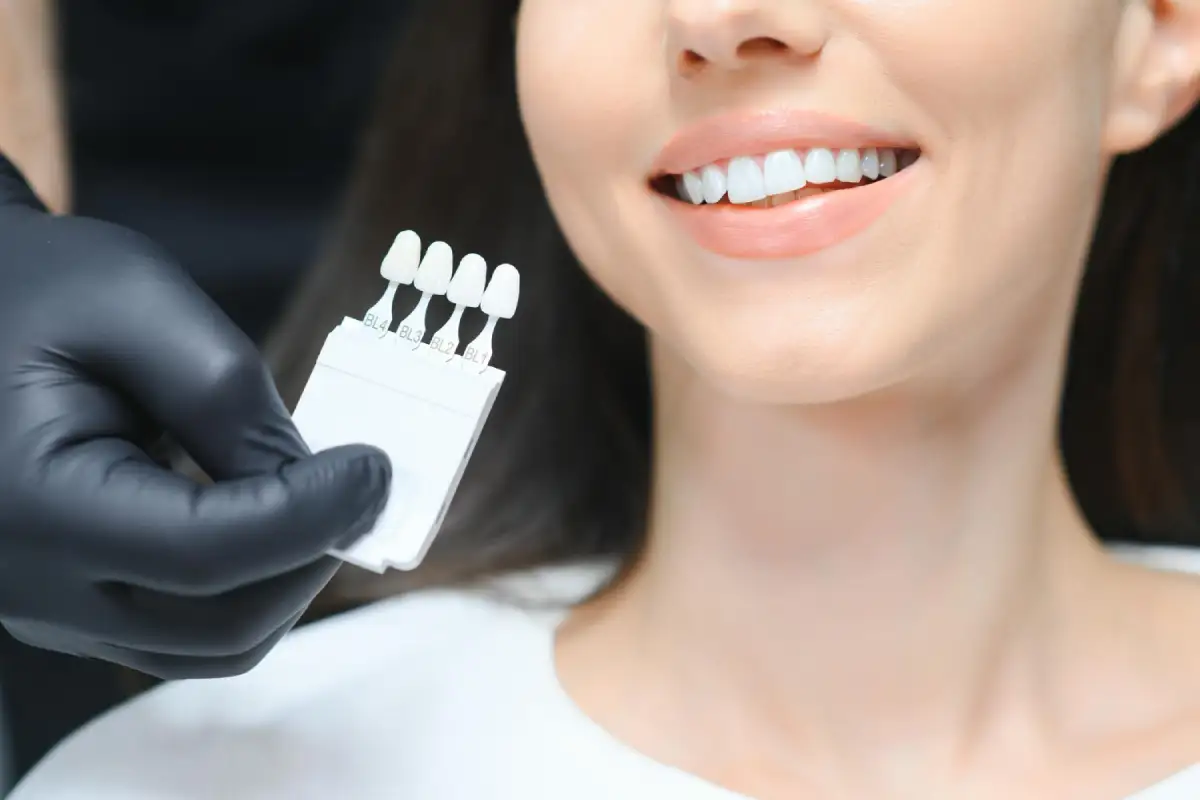
You do, with guidance. Shade is selected using a guide in appropriate lighting and confirmed at the try-in stage before final fixing.
Can I see the result before treatment starts?
Yes. Digital design followed by an in-mouth mock-up allows length, shape and shade to be adjusted before irreversible preparation.
How long do these restorations last?
Longevity depends on the material, the fit, your bite and your maintenance. Daily hygiene, regular check-ups and a night guard where needed all extend their lifespan.