

Planning Before Preparation
The decisive work in aesthetic dentistry happens before any tooth is touched. Digital smile design is the process of planning the result first, then working backwards to determine what treatment is needed to achieve it. This reverses the older approach, in which teeth were prepared and the laboratory was left to interpret the outcome. Planning first means the preparation is guided by the design rather than the design being constrained by the preparation, which allows far more conservative treatment. It also gives the patient something concrete to respond to at a stage when everything can still change. The systems we use are described on our digital dentistry page.
Capturing the Starting Point
Design begins with accurate records. Standardised photographs are taken from defined angles in consistent lighting, capturing the face at rest, while speaking and while smiling, because a smile that works only in a posed photograph is of limited use. An intraoral scanner then records the teeth and surrounding tissue as a three-dimensional file, avoiding the distortion that impression materials can introduce and providing a permanent digital record. Where restorative work involves implants or complex cases, radiographs and three-dimensional imaging are added. Together these records give the clinician an accurate model of the current situation, which is the only reliable foundation for designing a change to it.
The Proportions That Shape a Smile
A natural-looking smile follows relationships rather than a single ideal shape. The design considers the position of the dental midline relative to the face, the width-to-length ratio of the central incisors, how tooth width decreases towards the back of the smile, the curve formed by the upper tooth edges and its relationship to the lower lip, the amount of gum visible when smiling, and the symmetry of gum levels. Surface texture and the way light reflects from each tooth also matter, since perfectly flat surfaces look artificial. These variables are adjusted to suit your face rather than applied from a template, which is why two patients asking for the same thing receive different designs.
From Design to Mock-Up
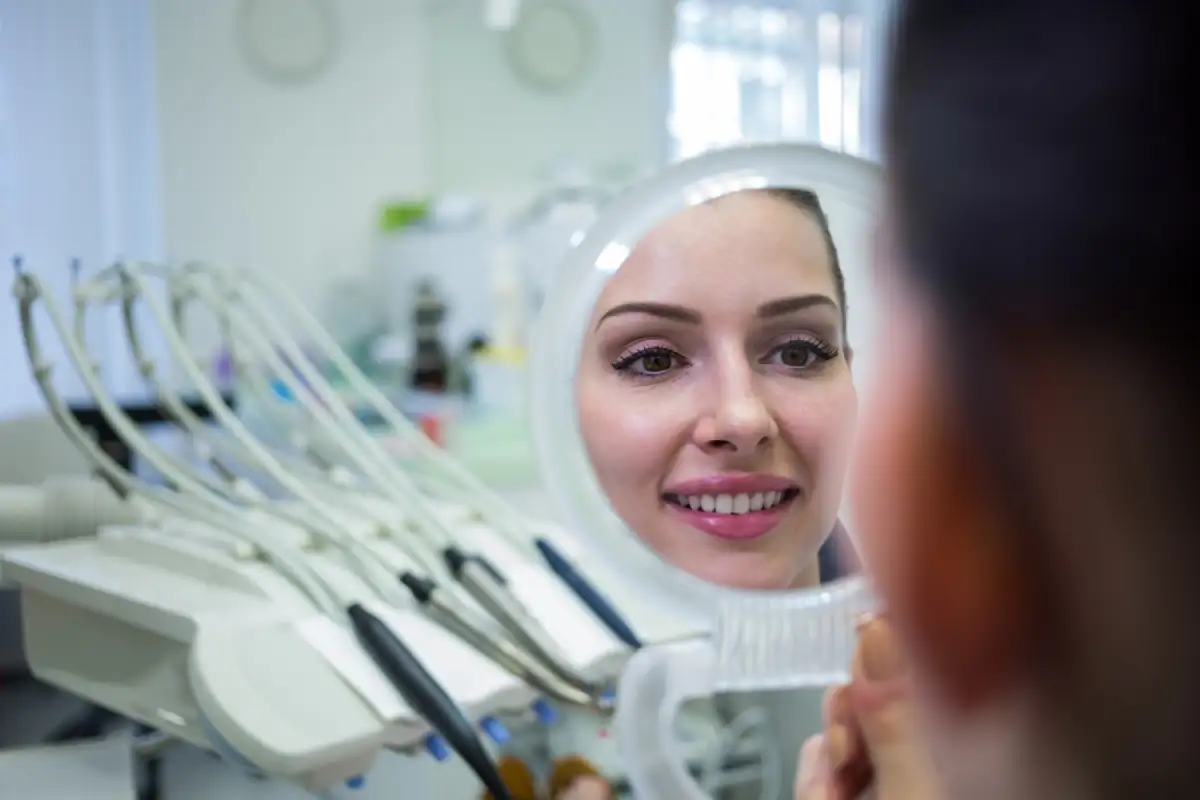
A design on a screen is persuasive but incomplete, because a smile exists in motion and in daylight. The mock-up converts the digital plan into a temporary physical version placed directly onto your teeth. You can then see it in a mirror, speak, smile naturally and view it outside the clinic environment. At this point every parameter remains adjustable: shorter or longer teeth, softer or squarer shapes, a brighter or more natural shade, a different smile line. Nothing irreversible has occurred, and no preparation has begun. Approving the mock-up is the moment the plan becomes final, which is why it should never be presented as an optional extra step.
How Design Reduces Tooth Reduction
The most practical benefit of designing first is conservation of tooth structure. When the final shape is known in advance, the clinician can prepare precisely as much as that shape requires and no more, sometimes using a silicone guide made from the approved mock-up to control reduction. Without a design, preparation tends to be generous to allow the laboratory room to work, and that generosity is paid for in enamel that can never be replaced. Designing first also reveals cases where the desired result can be achieved with composite adjustment, whitening or orthodontics rather than ceramics at all, which is the most conservative outcome of all.
Design in Implant and Full-Arch Cases
The same principle applies to implant treatment, where planning determines both function and appearance. Three-dimensional imaging is combined with a digital scan so that implant positions are chosen in relation to the planned restoration, not merely to available bone. This is the difference between placing implants where they fit and placing them where the final teeth need support. In full-arch cases, the design also defines tooth position, lip support and the shape of the prosthesis before surgery, allowing a fixed temporary bridge to be produced in advance. How this is applied to implant treatment is described on our implant page.
What to Ask Your Clinic
A few direct questions establish whether a clinic genuinely works this way. Ask whether a digital design will be produced before any preparation, and whether you will see a mock-up in your own mouth before approving it. Ask which teeth are included and which are being left alone, and why. Ask whether a preparation guide made from the approved design will be used to control reduction. Ask whether restorations are produced in-house, since that determines how easily refinements can be made. Finally, ask to see the clinic’s own documented cases, including preparation-stage images. Completed cases can be viewed on our before and after page.
Conclusion
Digital smile design changes the order of treatment: the result is agreed first, and the clinical work then serves that agreement. For the patient this means seeing and approving the outcome before anything irreversible happens; for the tooth it means less reduction, because preparation is guided by a known final shape. Insist on a design and a mock-up before preparation, and ask which teeth are genuinely included. Send us photographs of your smile and our clinical team will prepare an assessment of what your case would involve.
Frequently Asked Questions
What is digital smile design?
A process of planning the final result using photographs, digital scans and design software before any treatment begins.
How is it different from a mock-up?
The design exists on screen; the mock-up is a temporary physical version placed on your teeth so you can assess it in your own face.
Can I change the design?
Yes. Length, shape, shade and smile line can all be adjusted before any irreversible preparation takes place.
Does designing first reduce tooth reduction?
Yes. Knowing the final shape allows precise, minimal preparation, often guided by a silicone index made from the approved mock-up.
Is digital scanning more comfortable than impressions?
Most patients find it considerably more comfortable, and it avoids the distortion that impression materials can introduce.
Does this apply to implant treatment?
Yes. Implant positions are planned in relation to the final restoration rather than only to available bone.
Will the design show exactly what I will get?
It shows the planned result closely. The mock-up stage exists to confirm it in your own mouth and refine any details.
Can design reveal that I need less treatment?
Yes. In some cases whitening, composite adjustment or orthodontics achieves the goal without ceramic restorations.
How long does the design stage take?
It is generally completed within the first clinic appointments, before preparation begins.
What should I bring to the design appointment?
Photographs of smiles you like and dislike. Concrete references make the conversation far more productive.